
Heat pumps
Heat pumps, designed for Welsh homes
Most of the homes we work on are rural, off the gas grid and heated by oil, LPG or storage heaters. A properly designed heat pump replaces all of that — no more fuel deliveries, lower carbon, and very little maintenance.
How heat pumps work
A fridge, working in reverse
If you have a fridge, you already own a heat pump. It pulls heat out of the cold inside and releases it through the grille at the back. A heating heat pump does the same thing on a bigger scale: it collects heat from the outside air, the ground or water, and moves it into the water in your heating system and hot water cylinder.
It uses a little electricity to do this, but you get several times more heat out than the electricity you put in. That ratio is called the coefficient of performance (COP) — a COP of 3 means 3 kW of heat for every 1 kW of electricity.
Heat pumps are most efficient when they heat water to a gentle temperature. As a rough guide, a typical ground source system might manage:
| Water heated to | Typical COP | Heat per 1 kW of electricity |
|---|---|---|
| 35°C (underfloor heating) | about 4 | about 4 kW |
| 45°C | about 3.2 | about 3.2 kW |
| 55°C | about 2.4 | about 2.4 kW |
That's why design matters so much. We size the heat pump and the radiators or underfloor heating so the system runs as cool as possible while keeping every room warm.
Air source heat pumps
The most common choice
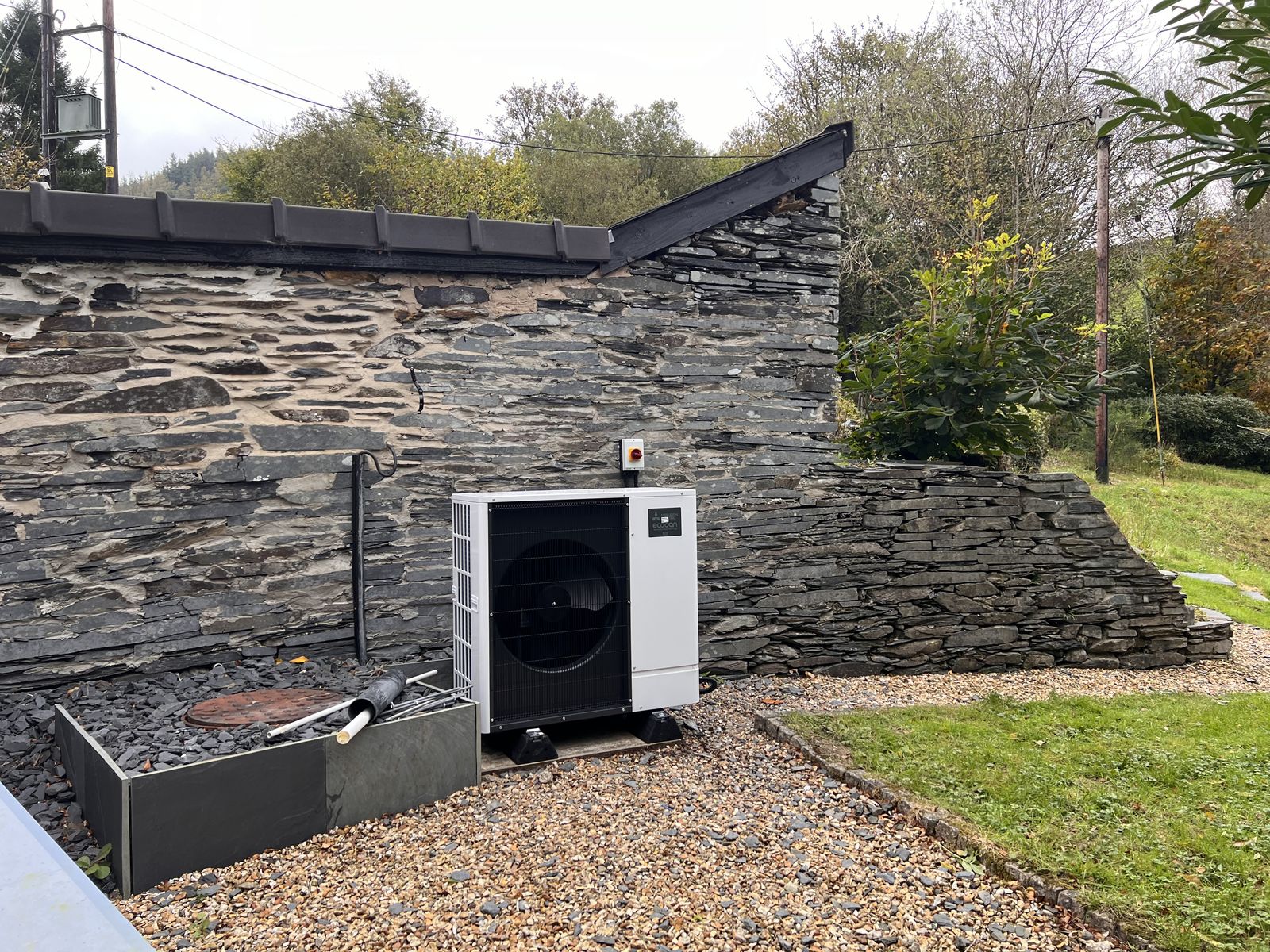
An air source heat pump sits outside the house — about the size of a large suitcase on its side. A fan draws air over a heat exchanger, the heat is extracted, and it's passed to the water that's piped into your home.
It might seem odd to take heat from cold air, but most days of the year in Mid Wales are mild to chilly, where a modern air source heat pump works well. On frosty days it will occasionally defrost itself automatically; a well-engineered unit does this efficiently.
We are a Mitsubishi Electric Business Partner and install Mitsubishi Ecodan air source heat pumps. They're quiet, reliable and well supported in the UK.
Air source is usually the most affordable option to install, needs no digging, and suits most homes — including older stone houses, as long as the heat loss is worked out properly and the radiators are sized to match.
Ground source heat pumps
The most efficient all year round
A ground source heat pump collects heat from the ground through a sealed loop of plastic pipe filled with antifreeze solution. Because the soil stays at a fairly steady temperature all year, ground source gives the best year-round efficiency.
The pipe goes either:
- In horizontal trenches about 1.5–2 m deep, as straight or coiled pipe. This needs a reasonable area of land, but is cheaper than drilling. Wet ground is better.
- In vertical boreholes, which need much less space but cost more to drill.
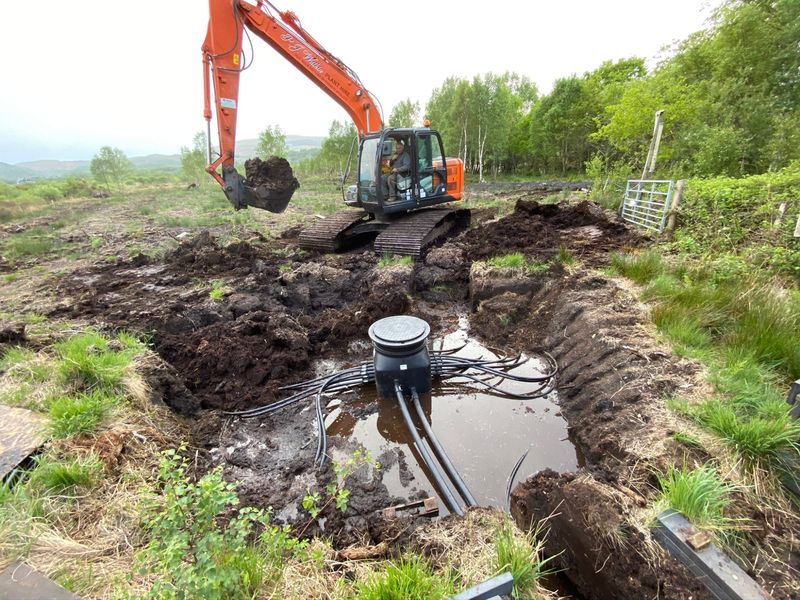
We've been digging in ground loops across Mid Wales for years — farms, paddocks and gardens — and we reinstate the ground afterwards.
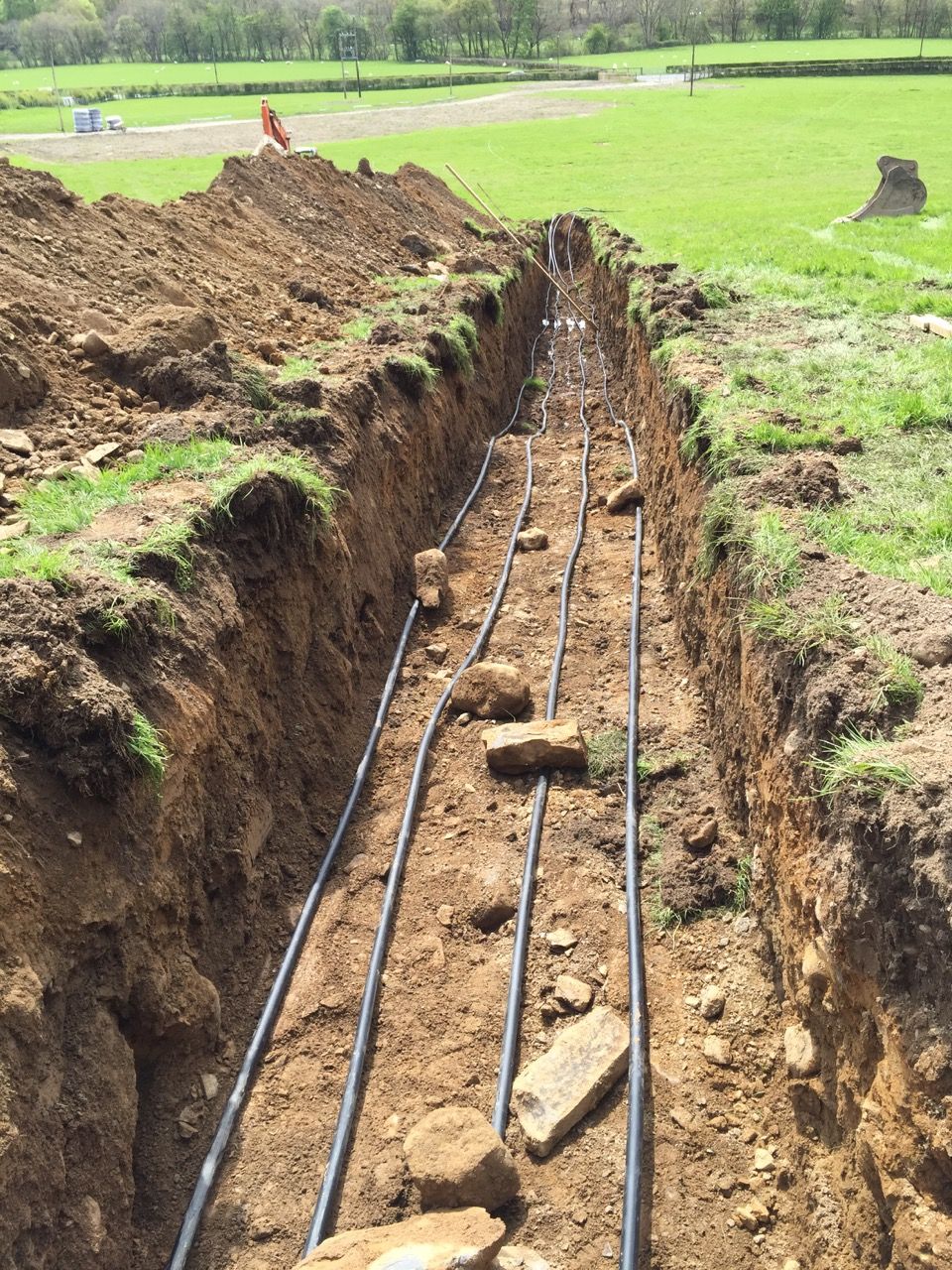
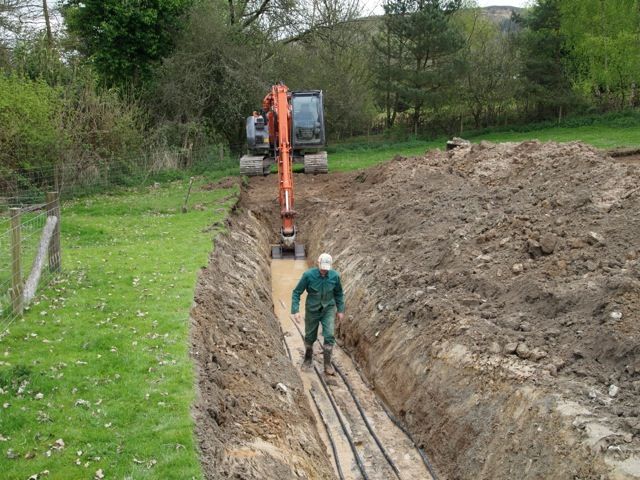

Left: digging the ground-loop trench. Right: the field reinstated.
Water source heat pumps
If you have a river, stream or spring
A water source heat pump uses a river, stream or spring as its heat source. Done well, it can be excellent — a spring in particular is a very stable source of heat and an opportunity not to overlook.
There are things to check first:
- Winter temperatures. Heat pumps need the water above roughly 5–8°C, so a river-fed system may need a back-up heat source for the coldest spells.
- Water quality. Acidity, oxygen and impurities can damage some units. Sometimes an intermediate heat exchanger is needed, which reduces performance.
- Distance and height. The source should ideally be close to the house and not far below it, so pumping doesn't eat into the savings.
- Permission. Taking water may need an abstraction licence from Natural Resources Wales.
If you think you have a suitable source, mention it when you get in touch and we'll take a look.
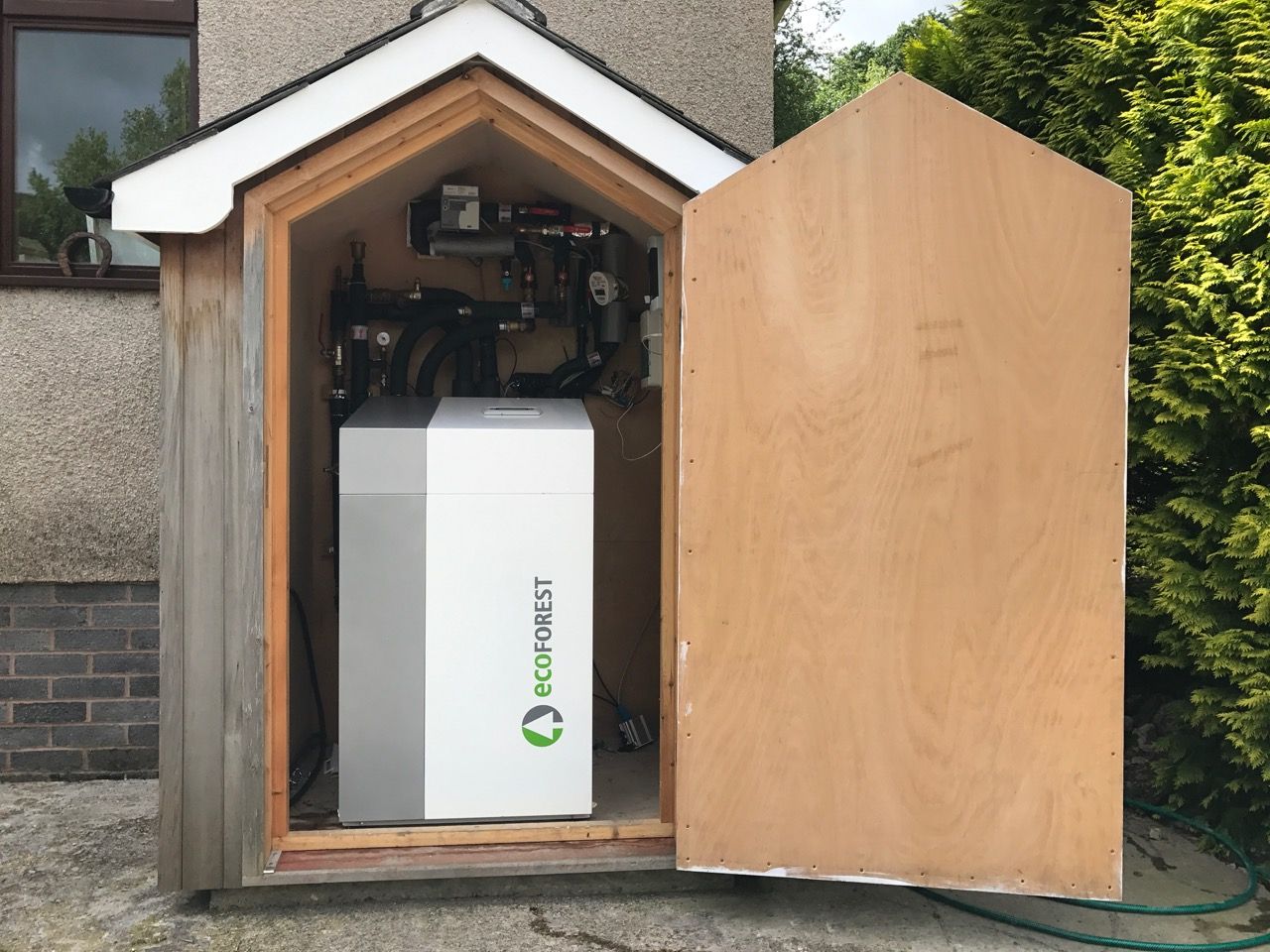
Whatever the heat source, the heat pump itself can live indoors or in its own weatherproof enclosure.
Radiators or underfloor heating?
Getting the heat into the rooms
Heat pumps deliver heat as warm water, just like a boiler — but at a lower temperature. To keep efficiency high, the radiators or floors need a larger surface area to give out the same heat.
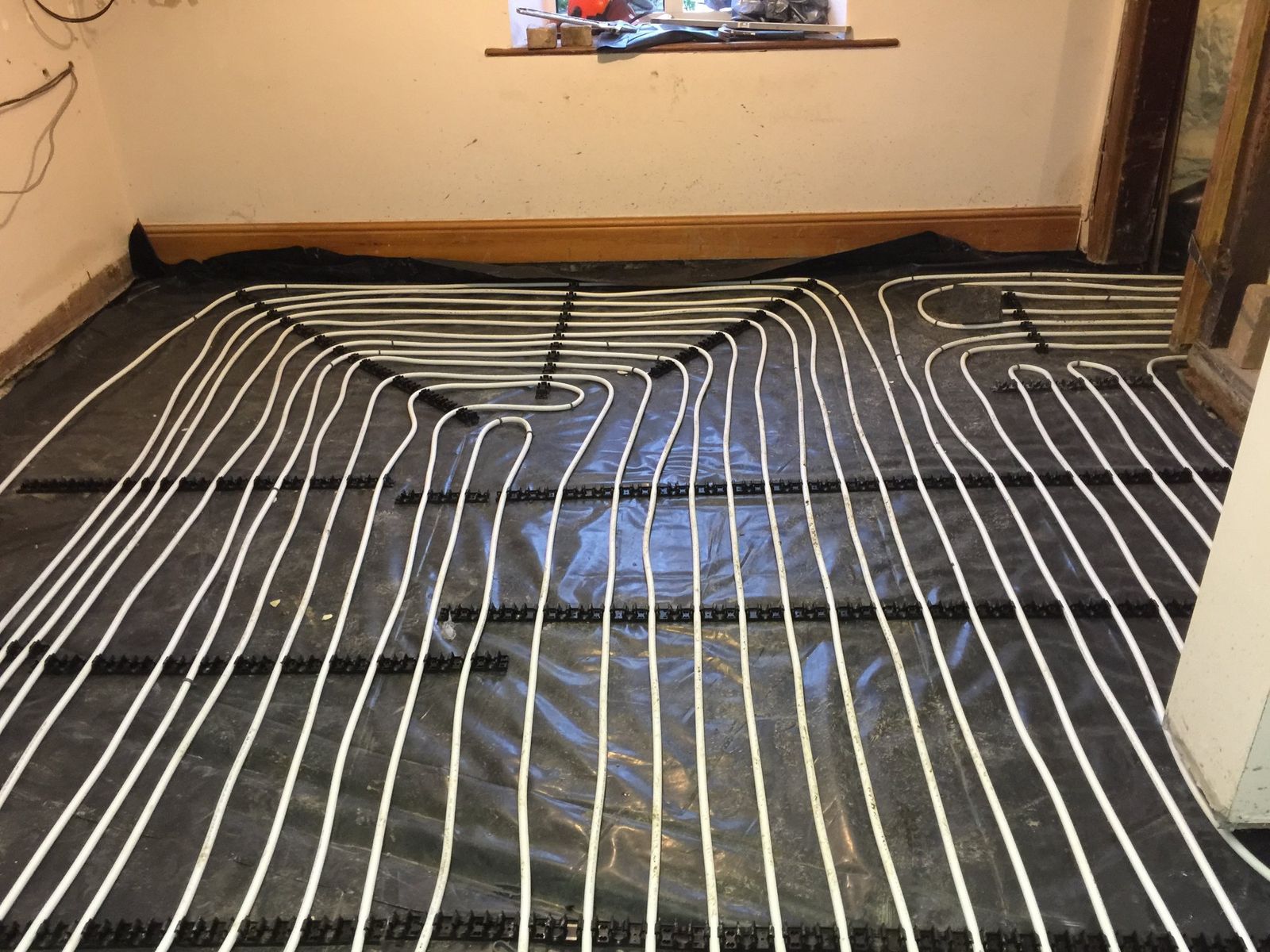
- Underfloor heating is ideal: comfortable, even warmth at low water temperatures. It needs to be designed for a heat pump — plenty of pipe, good flow rates, and no mixing valve knocking the temperature down.
- Radiators work well too, but often need to be larger than the ones sized for an oil boiler. We work out every room and upsize only where it's needed.
- Ducted warm air is possible but is usually less comfortable, especially in draughty buildings.
Heat pumps are less forgiving of poor design than boilers, which is why we do a full room-by-room heat-loss calculation on every job. Better insulation always helps, and we'll tell you honestly if there's something worth doing first.
Running costs
Cheaper electricity for your heat pump
Electricity prices have risen sharply over the last few years, so how you buy it makes a real difference. Several energy suppliers now offer tariffs designed for homes with a heat pump — some give you cheaper electricity at set times of day, others a lower rate for the heat pump itself. Most need a smart meter.
The best one depends on how you use your heating and hot water, and whether you have solar panels or a battery. We'll recommend a tariff that suits your home and explain how to get the most from it.
Adding solar panels or a battery brings running costs down further, because more of the electricity your heat pump uses is your own.
The Boiler Upgrade Scheme
Up to £9,000 off, and we do the paperwork
As an MCS certified installer we apply for the grant on your behalf and take it straight off your invoice.
£9,000
Air source or ground source heat pump for a home off the gas grid — for applications from 21 July 2026 to 31 March 2027.
£7,500
Air source, ground source or water source heat pump — the standard grant.
£2,500
Air-to-air heat pump. See air-to-air.
Grant amounts from Ofgem's Boiler Upgrade Scheme guidance, checked September 2026. Eligibility rules apply — we'll check yours at the survey. More on costs & grants →
Heat pump projects
Some of our heat pump jobs
Already have a heat pump?
Servicing and repairs
Once you're one of our customers, we look after your system — yearly servicing and repairs by our own team, so you always have someone local to call on. See heat pump servicing, or call 07985 029139.
Thinking of replacing an oil or LPG boiler?
Call, WhatsApp or email — or get an instant heat pump estimate online. We'll get back to you within one working day. No pushy sales calls.